If you’ve ever sat in a classroom, museum exhibit, or even a vet tech training lab and stared at a plastic bird that looks like it was carved by a toddler with a dull butter knife, you know exactly what I’m talking about. Most “educational animal models” for birds these days are either cheap, lopsided, and barely recognizable as a sparrow, or so hyper-scientific that they look like they belong in a particle accelerator, not a middle school lesson. That’s why when people ask me, “Are there actually educational AND realistic bird models out there?” my answer is a resounding YES—and I’ve spent the last 10+ years building them for schools, vets, and hobbyists who are tired of settling for less. Educational & Realistic Animal Models
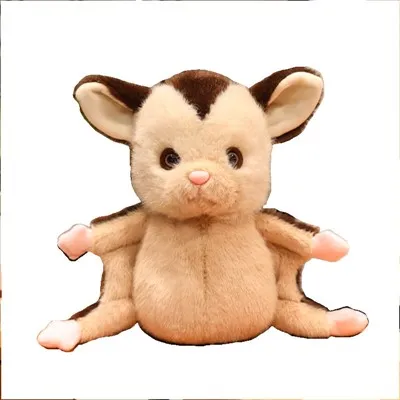
Let’s start with the big myth most folks buy into: realistic = only for fancy research. Nah, that’s not true. A model’s realism isn’t about being a life-sized (or giant-sized) carbon copy of a bald eagle—it’s about having tiny, teachable details that actually matter. For example, if you’re teaching 5th graders about bird beak adaptation, do you really want a model beak that’s smooth and plastic? No. You want a model where the finch beak has a tiny, ridged edge that makes it clear it’s for cracking seeds, while the heron beak has a sharp, pointed tip you can feel (but won’t poke a kid’s finger) for catching fish. I can’t tell you how many times I’ve heard a teacher say, “My kids actually remembered what a ‘probe beak’ is now that they can feel the grooves on the model’s bill, not just read about it in a textbook.” That’s the magic of balancing education and realism—you don’t have to choose one over the other.
Now, let’s break down what actually makes a bird model good, not just pretty. First, it has to fit the use case. A model for a high school biology lab needs to be durable enough to get tossed around between 30 kids a day, while a model for a small vet clinic training a tech who’s learning to palpate a bird’s crop needs to be soft in the right places—like the chest, where a real bird’s crop sits—and firm in the leg bones so you can practice proper bandaging. I see so many vendors dropping the ball here: they make a one-size-fits-all parrot model and call it a day, but a classroom setting isn’t the same as a vet training setting. Our team designs every model after talking to the actual people using it—teachers, vet techs, rehabbers—because who knows better what you need than the ones doing the work?
Take our zebra finch model, for example. Zebra finches are the go-to for teaching bird development, bird song, and even basic anatomy, but most models are just a tiny plastic blob with wings. Ours has removable feathers (the synthetic ones, not actual bird feathers—don’t worry, we’re strict about that) that let you see the undercoat, the tiny pin feathers, and even the small muscle groups attached to the wings. We also added a little “song box” that plays the finch’s actual mating call at 50% volume (loud enough to hear, not loud enough to annoy the whole class) when you touch the chest. We tested this in a 7th grade class last year, and the teacher told us that even the quietest kids were raising their hands to ask questions about why finches sing, just because they could trigger the sound. That’s educational, realistic, and way more engaging than a worksheet.
Wait, but what about the “realistic” part? I’ve heard people say, “Why not just use real bird specimens?” But let’s be real—most schools can’t afford to stock a bunch of preserved bird specimens, and even if they could, handling them is a no-go for little kids (plus, some people have issues with using dead animals for education). Plus, real specimens don’t let you take apart a bird’s digestive system without ruining a $500 teaching tool. Our models are made with a mix of food-grade silicone for soft parts (like the crop and breast) and rigid, BPA-free plastic for bones and beaks, so they feel like a real bird when you hold them. We even replicate the texture differences: a woodpecker’s skull has tiny, spongy bone to cushion its brain, so our model’s skull has that exact texture, not just a smooth block of plastic. A teacher in Texas told me her AP Bio students actually preferred using our woodpecker model over dissecting a real pigeon last semester, because they could pause to study a part, put it back, and re-study it as many times as they wanted—no smell, no mess, no ethical concerns.
Another area where we nail the realistic/educational balance is vet training. Bird owners are way more common now than they were 20 years ago—parrots, finches, even chickens as pets—and vets often have very little hands-on experience treating them. That’s where our avian exam models come in. They’re life-sized, look just like a real cockatiel or budgie, and have key “check points” that vets-in-training need to master: a palpable keel bone (that big chest bone birds use for flight), a wing vein for drawing blood, a cloaca for doing fecal tests, and even inflatable air sacs so you can practice administering oxygen or fluid therapy. We didn’t just make this up—we worked with 12 avian vet techs over 18 months to get every detail right, from the size of the keel to the feel of the skin. A vet clinic in Chicago told us last month that their new techs can now do a full avian exam in half the time, because they’re not fumbling with a model that feels like a plastic doll.
Now, let’s talk about the gaps we’re still trying to fill, because no one’s perfect. A lot of people ask about migratory bird models, especially for environmental science classes that teach about bird conservation. Most existing models are for common backyard birds, but we’ve been working on a set of migratory bird models (robins, warblers, swallows) that show the tiny leg muscles birds use for long flights, plus little GPS tags that fit on their legs to teach about tracking. We tested a prototype with a high school environmental science club in Minnesota last spring, and they used it to track local robin migrations for their science fair project. They said it was way easier than trying to figure out how to work a real GPS tracker on a live bird.
But here’s the thing: we’re not just a vendor selling models. We’re bird people first. I’ve been a hobbyist bird rescuer for 15 years, so I know exactly how frustrating it is to find a tool that actually works. Last year, a rehabber reached out to us because she needed a model of a red-tailed hawk with a broken wing to teach new rehab volunteers how to splint a real hawk’s wing. Most models have fixed wings, so we modified our hawk model to have detachable wings and a realistic fracture line on the humerus. That model is now used in rehab clinics across the country, and it’s helped dozens of volunteers learn how to handle injured birds without causing more harm.
I know there are still skeptics out there. Some people will say, “But nothing beats the real thing.” And yeah, that’s true—nothing beats holding a real sparrow or listening to a parrot talk. But most of the time, real things aren’t accessible. A rural school in Wyoming might only see a hawk once a month, but they can have our model year-round. A vet tech in a small town might never work on a real parrot until their third year, but they can practice on our model as much as they want. That’s why we do what we do—we make bird learning accessible for everyone, no matter where you are or what your budget is.
If you’re a teacher, vet, rehabber, or even just a bird nerd who wants a realistic model for your own collection, hit us up. We can talk through exactly what you need, customize a model if you have a specific request, or even send you a free sample to test in your classroom or clinic. Stop settling for plastic blobs that don’t teach a thing—let’s build something that actually works, and actually makes bird learning fun.
Animal Toys References
- American Association of Colleges of Veterinary Medicine. (2022). Core Competencies for Avian Veterinary Education.
- BirdLife International. (2021). The Importance of Non-Learning Objects in Ornithology Education.
- National Science Teachers Association. (2020). Best Practices for Hands-On Science in K-12 Classrooms.
- Journal of Zoo and Wildlife Medicine. (2019). Use of Anatomical Models in Avian Veterinary Training and Continuing Education.
- United States Fish and Wildlife Service. (2022). Migratory Bird Conservation: Educational Tools for K-12 Programs.
Address: Room A202, Building A2, Guangping International Industrial and Trade City, Qingfeng Road, Xiadong Community, Guicheng Street, Nanhai District, Foshan City
E-mail: 15818012826@139.com
WebSite: https://www.qiyingtoys.com/
