In the realm of bulk material storage and handling, silos stand as indispensable structures that play a crucial role in ensuring the seamless flow of products. As a seasoned silo supplier, I have witnessed firsthand the diverse challenges and solutions related to product flow. In this blog, I will delve into the mechanisms and strategies through which silos ensure efficient product flow, drawing on my years of experience in the industry. Silo

Understanding the Basics of Product Flow in Silos
Before we explore the ways silos ensure product flow, it is essential to understand the basic concepts of product flow in these structures. Silos are used to store a wide variety of bulk materials, such as grains, cement, coal, and chemicals. The flow of these materials within the silo is influenced by several factors, including the physical properties of the material (such as particle size, shape, density, and moisture content), the design of the silo (including its shape, size, and outlet configuration), and the operating conditions (such as the rate of discharge and the pressure within the silo).
There are two main types of flow patterns that can occur in a silo: mass flow and funnel flow. In mass flow, all the material in the silo moves out together, with the material near the walls also flowing along with the rest. This results in a first-in, first-out (FIFO) flow pattern, which is ideal for preventing material segregation and ensuring uniform product quality. Funnel flow, on the other hand, occurs when only the material in the center of the silo flows, while the material near the walls remains stationary. This can lead to problems such as material degradation, bridging, and rat-holing.
Silo Design for Optimal Product Flow
One of the most critical factors in ensuring product flow in silos is the design of the silo itself. A well-designed silo takes into account the specific characteristics of the material to be stored and the desired flow pattern. Here are some key design considerations:
Silo Shape
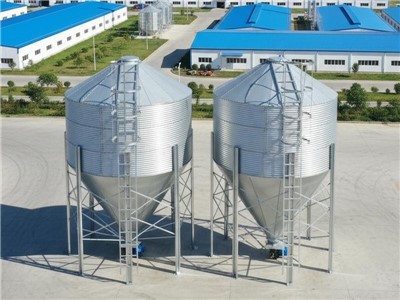
The shape of the silo can have a significant impact on product flow. Conical-bottom silos are commonly used because they promote better flow compared to flat-bottom silos. The conical shape allows the material to flow more easily towards the outlet, reducing the likelihood of bridging and rat-holing. The angle of the cone is also important, as it should be steep enough to ensure that the material can slide down freely. For most materials, a cone angle of 60 to 70 degrees is recommended.
Outlet Configuration
The design of the silo outlet is crucial for controlling the flow of material. A properly sized and shaped outlet can prevent blockages and ensure a consistent flow rate. There are several types of outlet configurations available, including single outlets, multiple outlets, and eccentric outlets. Single outlets are the simplest and most common type, but they may not be suitable for large silos or materials that are prone to bridging. Multiple outlets can help to distribute the flow of material more evenly, reducing the risk of blockages. Eccentric outlets are often used in silos where the material needs to be discharged in a specific direction.
Hopper Design
The hopper is the part of the silo that connects the cylindrical section to the outlet. A well-designed hopper can help to ensure smooth product flow by providing a transition from the larger diameter of the silo to the smaller diameter of the outlet. The hopper should be designed with a smooth interior surface to minimize friction and prevent material from sticking. It should also be sloped at an appropriate angle to promote flow.
Aeration Systems
Aeration systems can be installed in silos to improve product flow and prevent material from compacting. These systems work by introducing air into the silo, which helps to fluidize the material and reduce its internal friction. Aeration can be particularly beneficial for materials that are prone to bridging or rat-holing, such as fine powders and cohesive materials. There are several types of aeration systems available, including air pads, air knives, and fluidizing cones.
Maintenance and Monitoring for Continuous Product Flow
In addition to proper design, regular maintenance and monitoring are essential for ensuring continuous product flow in silos. Here are some key maintenance and monitoring tasks:
Inspection
Regular inspections of the silo should be carried out to check for any signs of damage, wear, or blockages. The interior of the silo should be inspected for cracks, corrosion, and the presence of foreign objects. The outlet and aeration systems should also be inspected to ensure that they are functioning properly. Inspections should be carried out at least once a year, or more frequently if the silo is used to store materials that are particularly abrasive or corrosive.
Cleaning
Periodic cleaning of the silo is necessary to remove any accumulated material and prevent the formation of build-up. This can be especially important for silos used to store materials that are prone to sticking or caking. Cleaning can be carried out using a variety of methods, including manual cleaning, air blowers, and high-pressure water jets.
Monitoring of Material Properties
The properties of the material being stored in the silo can change over time, which can affect its flow characteristics. It is important to monitor the material properties regularly, including its moisture content, particle size, and density. This information can be used to adjust the operating conditions of the silo, such as the aeration rate or the discharge rate, to ensure optimal product flow.
Monitoring of Flow Conditions
The flow conditions within the silo can also be monitored using a variety of sensors and instruments. These can include level sensors, pressure sensors, and flow meters. By monitoring the flow conditions, it is possible to detect any problems early and take corrective action before they become serious.
Troubleshooting Common Product Flow Problems
Despite the best efforts in design, maintenance, and monitoring, problems with product flow can still occur in silos. Here are some common problems and their solutions:
Bridging
Bridging occurs when a stable arch of material forms over the outlet, preventing the material from flowing. This can be caused by a variety of factors, including the cohesive properties of the material, the shape of the silo, and the presence of moisture. To prevent bridging, the silo should be designed with a steep enough cone angle and a smooth interior surface. Aeration systems can also be used to break up the arch and promote flow.
Rat-Holing
Rat-holing occurs when a narrow channel forms in the center of the silo, allowing the material to flow only through this channel while the material near the walls remains stationary. This can be caused by the funnel flow pattern, which is more likely to occur in silos with flat bottoms or shallow cone angles. To prevent rat-holing, the silo should be designed for mass flow, with a steep cone angle and a proper outlet configuration. Aeration systems can also be used to fluidize the material and prevent the formation of rat-holes.
Segregation
Segregation occurs when the different components of a mixed material separate from each other during storage or flow. This can be caused by differences in particle size, shape, or density. To prevent segregation, the silo should be designed to promote mass flow, which ensures that all the material in the silo moves out together. The material should also be loaded and discharged in a way that minimizes agitation and mixing.
Conclusion
In conclusion, ensuring product flow in silos is a complex process that requires careful consideration of many factors, including the design of the silo, the properties of the material being stored, and the operating conditions. By understanding the basic principles of product flow and implementing the appropriate design, maintenance, and monitoring strategies, it is possible to minimize the risk of problems and ensure a continuous and efficient flow of products.
Silo If you are in need of a silo solution that can ensure optimal product flow for your specific application, I invite you to contact us for a consultation. Our team of experts has extensive experience in designing and supplying silos for a wide range of industries, and we can work with you to develop a customized solution that meets your needs. Let’s work together to ensure the smooth and efficient handling of your bulk materials.
References
- ASABE Standards. (2018). Agricultural and Food Processing Systems. American Society of Agricultural and Biological Engineers.
- Eurocode 1: Actions on Structures – Part 4: Actions on Silos and Tanks. (2006). European Committee for Standardization.
- Wypych, G. (Ed.). (2012). Handbook of Fillers, Second Edition. ChemTec Publishing.
Henan Oumu Intelligent Storage Equipment Co., Ltd.
As one of the most professional silo manufacturers and suppliers in China, we’re featured by quality products and good service. Please rest assured to buy customized silo made in China here from our factory. For quotation, contact us now.
Address: No. 681, Xinzhong Avenue, Hongqi District, Xinxiang City, Henan Province
E-mail: luna@oumu-silo.com
WebSite: https://www.oumu-silo.com/
