If you’ve ever wandered through a dairy farm at dawn, watching a loader dump a mountain of fresh alfalfa, ryegrass, and clover into a mixing bin, or talked to a small-scale livestock farmer pulling weeds and hay from a field to prep for the week, you know how much time and effort goes into making forage edible, consistent, and nutrient-dense. That’s where forage pulpers come in—machines that chop, shred, and process roughage into uniform particles, making it easier for cows, goats, sheep, and even horses to digest, while also simplifying feeding and reducing waste. As a supplier who’s worked directly with farmers, agronomists, and feed mill operators for over a decade, one of the most common questions I get is: “What’s the production capacity of a forage pulper per hour?” It’s not a one-size-fits-all number, and skipping the details can lead to overbuying a machine that sits idle or underbuying one that can’t keep up with daily demand. Let’s break this down the way I do with every customer—no overly technical jargon, just real-world numbers tied to actual use cases. Forage Pulper
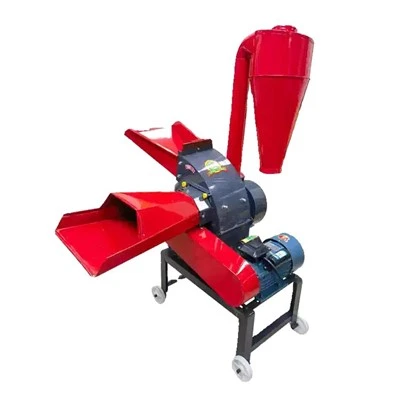
First, it’s important to clarify: production capacity for a forage pulper isn’t a random stat pulled from a spec sheet. It depends on three core factors: the type of forage you’re processing, the moisture content of that forage, and the specifications of the pulper itself. I’ve seen farmers walk into a sale looking for a machine that does 2 tons per hour, only to realize that number is for dry hay, not wet silage—two very different materials that behave totally differently inside a pulper. Let’s start with the basics of what a forage pulper actually does, because that context changes everything. Unlike a hay cutter, which just slices stems, a pulper uses rotating blades or impact hammers to break down fibrous forage into small, consistent particles, usually between 1/4 inch and 1 inch in size. This uniform size is key for ruminants: smaller particles mean more surface area for digestive bacteria to work, leading to better feed conversion and higher milk or weight gain.
Now, let’s get to the numbers, organized by use case, because that’s what matters most to someone making a purchase. I split my customers into four main groups: small-scale hobby farmers and homesteaders, mid-sized family-owned dairy or livestock operations, commercial feed mill operators, and specialty producers (like organic dairy farms or horse feed manufacturers). Each has totally different hourly capacity needs, and matching the pulper to those needs is where I add the most value.
For small-scale hobby farmers and homesteaders—think someone with 10 to 50 head of cattle, goats, or horses, processing their own hay, pasture grass, and occasional garden waste (like leftover corn stalks or pumpkin vines)—their hourly capacity needs are modest. The pulpers I recommend here are compact, electric-powered models with blade systems, not heavy-duty hammer mills. These small units typically have an hourly production rate between 500 pounds (0.25 tons) and 1,500 pounds (0.75 tons). Wait, I know that might sound low, but let’s do the math: a homesteader with 20 goats eats roughly 15 pounds of forage per head per day, so 300 pounds total. Even if they process for both their goats and a few pasture-raised pigs, 1,500 pounds an hour is more than enough to prep a week’s worth of feed in an hour or two. I recently worked with a customer in Ohio who has 15 cows and a small vegetable stand, processing 1,000 pounds of surplus squash vines and grass clippings for his calves each week—his compact electric pulper runs at 1,100 pounds an hour, and he uses it for only 45 minutes a day. The key for these small units is that they’re designed for batch processing, not 8-hour straight runs, which is why their capacity is lower than heavy-duty models.
Next, mid-sized family-owned dairy or livestock operations—usually 50 to 500 head of cattle, or 100 to 1,000 sheep, often operating 8 to 10 hours a day processing forage for their own herd, or a small amount for local neighbors. For these customers, I recommend medium-duty pulpers, either electric or diesel-powered, with hammer mill blade systems that can handle higher volumes without sacrificing particle consistency. Their hourly capacity ranges from 1.5 tons to 5 tons per hour. Let’s look at a real example here: a dairy farm in central Wisconsin I worked with last year has 220 Holstein cows, each eating about 50 pounds of forage per day, so total daily forage needs are 11,000 pounds, or 5.5 tons. They run their pulper for 4 hours a day, so a 2-ton-per-hour pulper would be perfect, right? Wait, no—wait, that’s for dry hay. Their main forage is high-moisture alfalfa silage, which has a moisture content of around 65%, not the 10% dry hay I mentioned earlier. Silage is softer, more slippery, and tends to jam pulper blades if the machine isn’t sized right. For silage, a medium-duty pulper’s capacity drops by about 20-30% compared to dry hay, so that same 2-ton-per-hour model only does 1.4 to 1.6 tons per hour of silage. So for 5.5 tons of silage a day, a 3-ton-per-hour pulper (capable of 2.4 tons of silage per hour) would let them run for roughly 2.5 hours a day, which is efficient and avoids overworking the machine. That’s the kind of nuance I walk through with every mid-sized customer—looking at their daily forage type, how many hours they want to spend on processing, and avoiding the mistake of sizing a machine for the highest possible capacity instead of their actual needs.
Then there are commercial feed mill operators, or large-scale livestock operations with 500+ head of cattle, running 8 to 16 hours a day, processing hundreds of tons of forage for sale to other farms or for their own herds. For these customers, heavy-duty industrial pulpers are the only option, and their hourly production capacity is much higher. These big units, usually diesel-powered with heavy cast-iron hammers and reinforced blade shafts, have an hourly capacity between 6 tons and 20 tons per hour, depending on the forage type. Again, moisture and forage type matter here: dry hay can hit 20 tons an hour, but wet silage or even wet grass might drop to 12-15 tons an hour. I recently worked with a feed mill in Minnesota that processes alfalfa hay for sale to organic dairy farms, running their heavy-duty pulper 12 hours a day, 5 days a week. They process dry hay at 18 tons per hour, which translates to 1,080 tons of processed forage a week—enough to supply 10+ mid-sized dairy farms. That’s the scale where hourly capacity numbers really add up, and cutting even a tenth of a ton per hour from jams or slow processing costs them thousands of dollars a week in lost production.
Now, it’s not just about the machine’s specs—there are hidden factors that shift hourly capacity, and I’ve seen these derail more purchases than anything else. The first is moisture content, like I touched on. Dry hay (10-15% moisture) is easy for pulper blades to cut, so it flows through quickly. Silage (60-70% moisture) is sticky, clumpy, and can bind between blades if not fed correctly, cutting capacity by 20-40%. Fresh pasture grass (75-85% moisture) is even softer, but it tends to mat together, so capacity might only be 50-60% of dry hay capacity for the same machine. The second factor is particle size requirement. If a farmer needs 1-inch particles for mature cows, the pulper runs faster and handles more forage per hour. If they need 1/4-inch particles for young calves, the blades have to spin slower or pass the forage through twice, cutting hourly capacity by 30% or more. The third factor is feed rate—how fast the operator feeds forage into the pulper. Overloading the machine by shoveling too much hay or silage at once causes jams, breaks blades, and lowers effective capacity. Feeding at a steady, controlled rate (most medium and heavy-duty pulpers come with optional auger feeders that automate this) maximizes hourly output without damage.
I also want to address a common myth I hear all the time: “A higher horsepower pulper always has a higher hourly capacity.” That’s not true, and it’s a mistake I see small farms making all the time. A 20-horsepower electric pulper for small farms isn’t less powerful than a 50-horsepower model for mid-sized farms, it’s built for consistent, light processing of small batches. A 50-horsepower pulper is designed for 8-hour runs of wet silage, so even though it has more horsepower, using it to process 500 pounds of dry hay an hour would be inefficient, and the machine would wear out faster. It’s like using a pickup truck to carry a single bag of mulch—way more power than you need, and not practical.
So, putting this all together, what’s the takeaway for someone shopping for a forage pulper? The “average” hourly capacity depends on your operation: if you’re homesteading, 0.5 to 1.5 tons an hour. If you’re mid-sized, 1.5 to 5 tons an hour. If you’re commercial, 6 to 20 tons an hour. But those numbers shift based on what you’re processing, how small you need the particles, and how often you’ll run the machine. That’s why I never just send a spec sheet to a customer—first, I ask them: What type of forage do you process 90% of the time? How many animals do you have? How many hours a day do you want to spend processing feed? Do you need to process multiple forage types, from dry hay to wet silage? Those questions help narrow down the right pulper, not just the one with the highest hourly capacity.
Over the years, I’ve had customers come to me after buying a cheap pulper from a big-box supplier, thinking a 3-ton-per-hour unit would be enough for their 100-head dairy farm, only to find it can only do 1.8 tons an hour of their main alfalfa silage, leaving them stuck processing feed late at night or feeding less nutritious, unprocessed forage to their cows. On the flip side, I’ve had a commercial feed mill buy a 15-ton-per-hour pulper when they only needed 10 tons an hour, wasting tens of thousands of dollars on a machine they never used to full capacity. That’s why clarity on hourly production is key—it’s not just a number, it’s a way to make your operation more efficient, reduce labor, and keep your animals fed with consistent, high-quality forage.
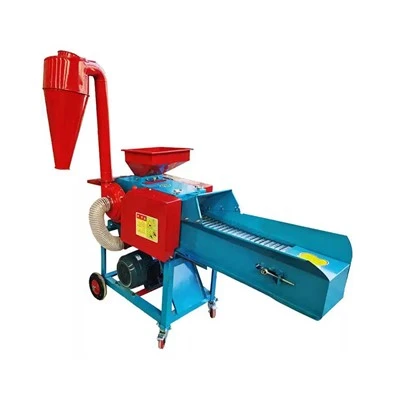
At the end of the day, a forage pulper is an investment that saves you time and money, not just a piece of equipment. Knowing its hourly production capacity means you can plan your feeding schedule, avoid downtime from jams or overloaded machines, and make sure your livestock get the nutrition they need to thrive. If you’re in the market for a forage pulper and you’re not sure what capacity is right for your farm or operation, I’m here to walk through your specific needs, answer any questions, and help you pick the machine that fits your work and your budget. Reach out to talk through your requirements, no sales pressure, just real advice from someone who’s worked with hundreds of farmers across the country.
Biomass Pellet Mill References
- Agricultural Engineering Department, University of Wisconsin-Madison. Forage Processing Equipment and Capacity Guidelines for Small to Mid-Scale Livestock Operations. 2021.
- National Dairy Farmers of America. Forage Particle Size and Its Impact on Ruminant Digestibility and Feed Efficiency. 2022.
- Feed Industry Association of North America. Industrial Forage Processing Machinery Specs and Performance Standards. 2020.
- Small Farm Journal. Guide to Sizing Forage Pulpers for Hobby and Part-Time Livestock Operations. 2019.
- Penn State Extension. Moisture Content Effects on Forage Processing Equipment Performance. 2023.
Zhengzhou Xinyihaotong Machinery Manufacturing Co., Ltd.
As one of the most professional forage pulper manufacturers in China, we also support custom service. We warmly welcome you to buy high quality forage pulper for sale here from our factory. For price consultation, contact us.
Address: Rooms 2301–2312, Jiayi Building, Xinxiang City, Henan Province, China
E-mail: zhaoyixuan5566@gmail.com
WebSite: https://www.xyhtmachinery.com/
