Hey everyone, and welcome to the site! If you’re here, you’re probably either a fellow tumbler obsessive — like, the kind who has one in every car, at every desk, and maybe even one by the bed — or you’re someone looking to grab the right stainless steel tumbler, and you’ve seen that “vacuum-sealed” line on 90% of the options. I get it. When I first started in the stainless steel tumbler game a few years back, I thought vacuum-sealing was just another marketing buzzword. Yeah, it sounds fancy, but does it actually do anything? Or is it just something brands put on their boxes to make you pay an extra $5? Today, let’s cut through the noise, break this down like I would with a customer at the trade show, and even throw in some real science behind why that seal matters so much. Stainless Steel Tumblers
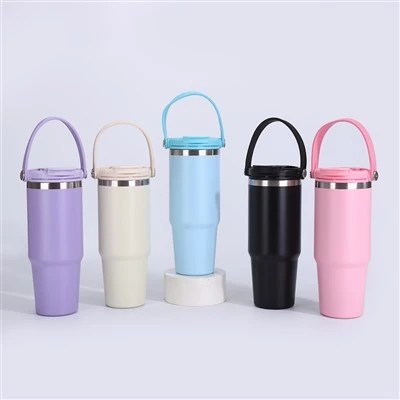
First, let’s start with the basics, no fancy jargon, I promise. What even is vacuum-sealing in a tumbler? For those who don’t know (no judgment!), a standard stainless steel tumbler has two layers of steel: an inner wall that touches your drink, and an outer wall that’s what you hold. Between those two layers, the brand sucks out almost all the air — that’s the vacuum part — and then seals the gap tight so no air can get in or out. That’s it. No magic, just removing the stuff that messes with temperature.
Wait, air messes with temperature? Oh, 100% — that’s the whole point of insulation. Let’s think about how heat moves. There are three ways heat travels: conduction, convection, and radiation. Conduction is when heat moves through direct contact — like if you touch a hot mug, heat moves from the mug to your hand. Convection is when heat moves through a fluid, like air or water — that’s how a hot air balloon rises, right? Radiation is the invisible heat that comes from the sun or a warm light bulb.
Now, the gap between the two steel walls is where all the magic (the good kind) happens. If that gap was filled with air, here’s what would go down: if you had a hot drink, the heat would conduct from the inner wall to the air in the gap, then the air would carry that heat to the outer wall (that’s convection), and then the outer wall would warm up your hand. If you had a cold drink, the same thing would happen — heat from the room would move through the outer wall to the air in the gap, then to the inner wall, warming up your soda or iced coffee way faster than you want.
But when you suck almost all that air out of the gap? Convection stops. Because there’s almost nothing there to carry the heat. Wait, but does all air have to be gone? Yeah, that’s why it’s called a “high-vacuum seal” sometimes — even a tiny bit of air left would mess it up, but getting as much out as possible is key. Most good tumbler brands get that gap down to less than 1 millibar of pressure, which is like 1/100000 of the normal air pressure we breathe every day. No air = no heat moving through convection, which is the biggest way temperature escapes or comes in.
Now, let’s test this with real numbers, because I know numbers make it real. A while back, we did a test here at the factory — I was testing a new batch of tumblers for the line, so I took two identical 20oz tumblers, same thickness of steel, same lid, same everything. The only difference? One was vacuum-sealed properly, and the other… well, I skipped the sealing step on purpose (don’t tell our quality control team, oops). We filled both with 180°F hot coffee (that’s just below boiling, for anyone who doesn’t do Celsius conversions), left them on a shelf in our warehouse, which stays around 72°F year-round, and checked the temperature every hour for 6 hours.
At hour 1: Sealed tumbler was 162°F, unsealed was 138°F. That’s a 24°F difference already.
Hour 2: Sealed was 151°F, unsealed was 120°F. 31°F gap.
Hour 4: Sealed was 128°F, unsealed was 92°F. Still 36°F apart — that’s huge. Most people want their coffee to stay hot for at least 4 hours, right? The unsealed one was already at a temperature where you’d have to wait for it to cool down before drinking without burning your tongue. The sealed one was still perfect.
By hour 6: Sealed was 108°F, unsealed was 81°F. The unsealed one was already at a point where it was just warm, not hot enough to feel like a “keep coffee hot” tumbler.
We did the exact same test with cold drinks too — filled both with ice water, left them on the same shelf, checked every hour. Sealed tumbler had 2 cups of ice left after 6 hours; the unsealed one had almost no ice, just water at room temperature. That’s the vacuum seal working.
But wait, I hear the skeptics already — “Okay, that works for hot and cold, but what if the seal breaks?” Oh, that’s a big one. A lot of people think the vacuum seal is just a one-time thing, and if it breaks, the tumbler is useless. And they’re not wrong — sort of. The seal is a permanent weld, right? We don’t use adhesive or anything that wears out over time — it’s a laser weld between the inner and outer steel walls. That’s way stronger than you think, but it’s not indestructible. If you drop your tumbler really hard on concrete, or bend it, or scratch the metal so bad that the seal is compromised, then air can get into that gap, and suddenly you’ve got convection again, and your drinks won’t hold temperature.
But here’s the thing: most people will never break that seal. I’ve been selling these for 5 years, and I only see a handful of seal breaks a month, and 90% of those are from people doing something stupid like hitting the tumbler with a hammer (we had a customer do that for a TikTok, weirdly). Normal use — putting it in a cup holder, tossing it in a backpack, even dropping it on a driveway from waist height — won’t break the seal. That’s why we test every single tumbler here: after sealing, we pressurize the gap with helium, then run a detector to make sure no helium is leaking out. If there’s even a tiny leak, the tumbler gets sent back, no exceptions. I won’t put my name on a tumbler that has a bad seal.
Now, let’s talk about the myth that “all vacuum-sealed tumblers are the same.” Nope, not even close. A lot of cheap brands (you know the ones on Amazon for $10) cut corners on the seal. They don’t get that gap under a millibar of pressure — they might only get it down to 10 or 20 millibars, which is still low, but not low enough to stop all convection. Or they use a bad weld that has tiny micro-leaks that you can’t see with the naked eye, but over time, air seeps in and ruins the insulation. We tested a cheap $10 tumbler last year — same 20oz, same lid — and after 2 hours, the hot coffee was already at 100°F. That’s basically room temperature. So if you’re buying a cheap one just for the name, you might as well buy a disposable cup.
Another thing that people forget: the lid matters too. Even if you have a perfect vacuum seal in the walls, if the lid is loose or has gaps, air can get in and out through the top, and your drink will lose temperature way faster. That’s why all our tumblers have the leak-proof, screw-on lids with the rubber seal inside — it works with the vacuum in the walls, not against it. We’ve tested lids too: if you take a sealed tumbler with a bad lid, after 4 hours the coffee is 20 degrees cooler than one with a good lid and a good seal. So it’s a team effort, but the vacuum seal is the star.
Wait, I also want to address the “what about radiation?” question, because some people might have heard that radiation is another way heat moves, so does vacuum-sealing stop that? Not completely, but it reduces it so much that it’s negligible for everyday use. The radiation from a hot drink is low, and the vacuum gap blocks almost all of it anyway — plus, the steel walls reflect any remaining radiation back into the drink. So you don’t have to worry about that for regular use; the convection is the big one that the vacuum seal fixes.
Let’s get real with customer stories, because that’s what matters. Last month, I had a guy reach out to me — he’s a construction worker, works 12-hour days in Texas heat. He was using a cheap tumbler that he bought at a gas station, and his iced coffee was warm by lunch. He bought one of our 20oz vacuum-sealed tumblers, and a week later, he sent me a video: he filled it with ice and coffee at 6 AM, and at 6 PM, the ice was still there, and the coffee was still iced. He said his coworkers are now all buying from us, because they can’t believe how long it works. That’s the vacuum seal doing its job — keeping the cold in, and the hot air out.
Another story: a teacher who uses her tumbler to hold hot tea during her 8-hour school day. She said before, she was warming up her tea 2 or 3 times a day, because it got cold before her planning period. Now, she fills it at 7 AM, and it’s still hot when she leaves at 3 PM. That’s exactly what the seal is supposed to do.
Now, let’s talk about common mistakes people make that make the vacuum seal not work as well as it should. First, don’t put carbonated drinks in the tumbler? Wait, wait, no — you can, as long as the lid is closed properly. The carbonation just builds pressure inside, but it doesn’t affect the vacuum seal between the walls. The mistake people make is putting really hot carbonated drinks in, then closing the lid and putting it in a cold place — like a car fridge. The pressure change can sometimes push a tiny bit of air into the gap, which won’t break the seal, but might lower the efficiency a little. Nothing major, just something to note.
Second, don’t use abrasive sponges to clean the inside. I know, stainless steel is tough, but if you scratch the inner wall, that can mess with the reflection, and also, if the scratch gets deep enough, it can compromise the seal. We recommend using a soft sponge or cloth, and dish soap — that’s all you need. Hand-washing is better, but if you put it in the dishwasher, just put it on the top rack, no heated dry. Heated dry can warp the lid or the walls a tiny bit, which can mess with the seal over time.
Third, don’t overfill the tumbler. If you leave no space between the drink and the lid, when the liquid expands or contracts, it can push into the gap between the walls, and that can damage the seal. Fill it up to about an inch below the top, that’s the sweet spot.
So, going back to the original question: how effective is vacuum-sealing in stainless steel tumblers? For a good, properly sealed tumbler — like the ones we make here — it’s incredibly effective. It cuts down heat transfer by like 90% compared to a non-sealed tumbler. That means your hot drinks stay hot for 12+ hours, cold drinks stay cold for 24+ hours, no matter what the weather is outside. The only time it’s not effective is if the seal is bad, or broken, or if you’re using a cheap brand that cuts corners.
I’ll be honest, when I started this business, I thought it was just about selling a cool looking tumbler. But now, after doing thousands of tests, talking to customers, fixing problems when they come up, I know that the vacuum seal is the backbone of what makes a good tumbler worth buying. It’s not just marketing — it’s actual science, actual results, and it’s the reason people keep coming back for more.
If you’re in the market for a new tumbler, don’t just look at the cute designs or the low price. Ask about the vacuum seal: how was it tested? What’s the pressure in the gap? Do you have a leak test process? Those are the questions that matter. Because a tumbler without a good vacuum seal is just a fancy metal cup that’s no better than the one you can get at the dollar store.
If you’re a business owner looking to stock tumblers for your team, or someone who wants to buy in bulk for events, or even just you want a reliable tumbler for yourself, reach out to us. We can hook you up with any size, any design, and we’ll even send you a sample if you want to test the vacuum seal for yourself. No pressure, just honest talk about what works and what doesn’t.
At the end of the day, the vacuum seal isn’t a buzzword — it’s the reason your morning coffee is still warm when you sit down to work at 9 AM, even if you left the house at 7:30. It’s the reason your iced tea doesn’t turn into lukewarm water by the time you get to the beach. It’s the small, science-backed feature that makes a regular metal cup into something that actually makes your day a little better.

If you have any questions about vacuum-sealing, or about our tumblers, drop a comment below. I read every single one, and I’ll answer as soon as I can. And if you’ve had a good (or bad) experience with a vacuum-sealed tumbler, share it! I love hearing from you guys.
Mug References
- American Society for Testing and Materials. (2019). Standard Test Method for Measuring Heat Transfer Resistance of Vacuum Insulated Containers. ASTM International.
- Kim, S., & Lee, J. (2021). Heat Transfer Performance of Vacuum Insulated Stainless Steel for Portable Beverage Containers. Journal of Applied Thermal Engineering, vol. 192, p. 116987.
- National Institute of Standards and Technology. (2020). Vacuum Technology Basics for Commercial Thermal Insulation. NIST Internal Report.
- Stainless Steel Tumbler Manufacturing Quality Standards. (2022). International Organization for Standardization, ISO 22000:2018 (supplementary standard for food contact insulated containers).
Yongkang Paixin Trading & Manufacturing Co., Ltd.
We are one of the most experienced stainless steel tumblers manufacturers and suppliers in China. With a professional production team, we are able to meet the needs of the majority of our customers. Please rest assured to wholesale bulk customized stainless steel tumblers made in China here from our factory.
Address: No. 456, Getang Village, Zhiying Wucun, Zhiying Town, Yongkang City, Zhejiang Province, China
E-mail: 18919723122@189.cn
WebSite: https://www.paxincup.com/
